
Wherever I travel, there’s a need to learn the language basics of the country I’m in.
Getting to grips with ‘hello’ and ‘goodbye’, ‘what’s your name’ and ‘how are you?’, and the all important ‘please’ and ‘thank you’ is simply common courtesy, and everything else you pick up is a bonus.
But in January 2013 I made the decision to travel long-term through South America, and ever since then one fact has been weighing heavily on my mind.
I don’t speak any Spanish.
Sitting astride the language barrier
During my past travels, not knowing the local language hasn’t been much of a problem. In India I picked up a modest amount of Hindi, especially while working in Punjab for six weeks with barely any sight of another Westerner.
It was the same in Thailand. The time I spent working on a farm gave me plenty of opportunities to practice simple phrases with my host family’s grandparents, and in Nepal, the kids I taught at school loved hearing my attempts at speaking Nepali.
As for my explorations closer to home, the smattering of European language phrases I pick up on the road – whether it’s German, French, Italian, Turkish, or Greek – have sufficed for the time I’ve spent in and around Europe. But the majority of the languages I’ve encountered on my travels so far have been the far flung ones I’d never had exposure to before – which meant I could effectively explain away my prior non-existent knowledge of them (and the completely different alphabets have also been a hindrance in that respect!).

Ecuador is going to be different.
Living in Cuenca for five months means I’ll be encountering the same people every day; from my fellow teachers at the school I’m working at, to the host family I’ll be staying with, my day to day Ecuadorian life is going to involve a lot of interaction with Spanish speakers. All of whom are going to expect me to talk.
“So why not simply learn Spanish?” I hear you ask. Well. That’s a very good question.
Initially trying (and failing) to speak Spanish
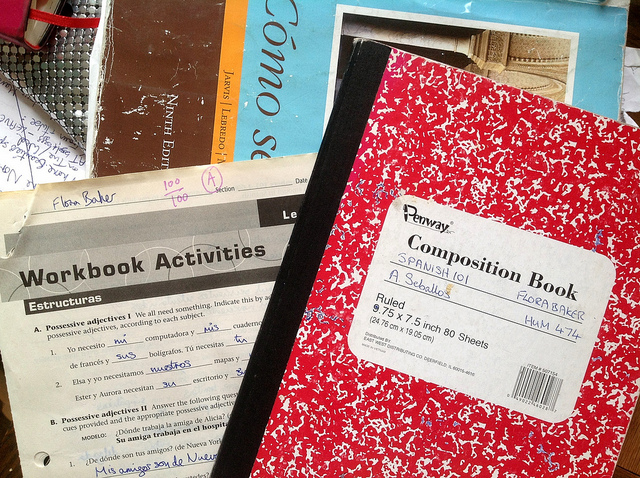
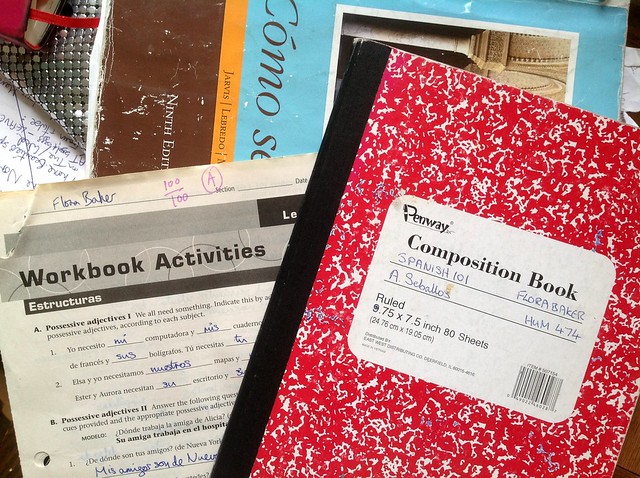
In 2009 I studied abroad in San Francisco, where I spent a semester taking Spanish. When enrolling for classes, the idea of studying ‘Spanish 101’ seemed like a really sensible idea; I knew I’d want to travel through South America at some point, so what better preparation than to try learning the lingo beforehand?
What I hadn’t prepared for was that ‘basic’ Spanish in San Francisco, California, is not ‘basic’ by anyone else’s standards. As far as I could tell, because of California’s close proximity to Mexico, pretty much every child in the state learns Spanish at grade school –– meaning I was the only total Spanish newbie in my entire class.
Throughout the course of the semester I didn’t do too badly, but I didn’t do wonderfully either. I came out the other side with a grasp of the language that was rudimentary at best.
Said grasp has also slipped completely away from me in the last two years, and I don’t seem to have retained any of it.

But I know that learning Spanish is a relatively manageable task which countless people the world over have been successful in. Why not me too?
So over the last few months I’ve attempted to kickstart my Spanish skills in a number of ways. And when I say attempted, I mean giving each avenue of Spanish instruction a woefully short period of time to make me significantly improve.
Don’t say I’m not a trier.
A list of my most recent failed attempts to speak Spanish
Reading blogs: First off, I read through copious blog entries on learning techniques, from the Rosetta Stone program
Reading old class notes: When I realised my inability to be influenced by others, I tried rereading old notes that I made in San Francisco, and leafing idly through the satisfyingly thick textbook I made a conscious effort to bring back to England when my year abroad ended. Hurray for forethought! But, sadly, my inability to concentrate put a fatal flaw in that particular effort.
Using children’s programs: In a fit of desperation, I turned to the child’s play route, downloading apps and podcasts designed for kids to learn language. I found a particularly fun iPad app called Doki, which uses little animated characters with big heads and no eyes to wander their way through real life situations and demonstrate what you’d say in Spanish in accompaniment.
Unfortunately it was a tad too ‘real life’ for me, and I was waylaid by the ‘agencia de viajes’ into virtually buying a ‘tiquete de ida’ to New Zealand (hey, look! I learned something!) and found myself chatting to the animated Greek guys in Doki City airport while waiting to board my flight.

Strangely enough, I came away from all these concerted efforts at learning Spanish with very little to show for it. Weird, huh?
A moment of realisation in my Spanish journey
Ok, so I’m a procrastinator (no surprise there, as I’m spending hours of my time perfecting this article about learning Spanish instead of actually attempting it). I keep telling myself (and everybody else who’ll listen) that once I’m actually living in Ecuador, surrounded by native speakers, will be when I feel my desire and drive to learn the language kicking in.
Ultimately, though, I know what my problem is. I’m terrified of not knowing enough. If I avoid looking at anything Spanish and attempting to learn, then I don’t have to discover how bad I am at learning it! It’s a very annoying perfectionist attitude, but it’s there nonetheless.
I want to be fluent straight away.
Or at least near fluency. I am a realist, after all.
So I actively shy away from even beginning to start studying properly, and sit safely in the knowledge that, without having tried, there’s no way I can say I’m bad at Spanish. The idea of being unable to say even the smallest of phrases – hell, not even knowing my numbers properly! – makes me feel defeated before I’ve even begun.
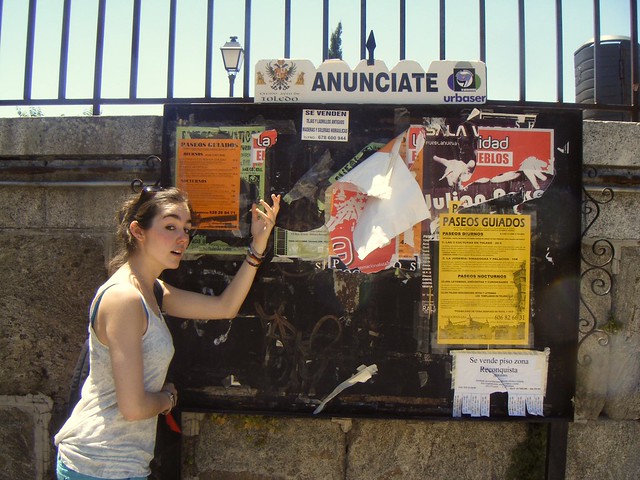
Yet another (and slightly hysterically resolved) effort to speak Spanish
So here’s the test. If I make this confession to you, my avid and lovely readers, that I’m terrible at forcing myself to bite the bullet and actually attempt to learn myself some Spanish – maybe things will change.
Over the next five months, while I’m living and teaching in Ecuador, I hereby promise that I will make every effort possible to learn, speak, and even think in Spanish. This means notebooks full of semi-translatable scribbles, taxing interchanges with the old lady at the nearby fruit stand, and copious barmen shaking their heads when I realise I can’t even order a drink to drown my sorrows in.
In a few weeks time, when I can call myself a semi-resident of Cuenca, the fun can really start – and I’m pretty sure it’s going to be equal parts hilarious and hysterical.
Spanish or no Spanish.




137 Comments
Cat of Sunshine and Siestas
January 23, 2013 at 12:12 pmI went to Spain thining I spoke Spanish after university classes, a stint in Valladolid, Spain and reading in Spanish. I was so, so wrong, and the first year in Seville was beyond frusterating. I think you’re right in making the acknowledgment that you’ve perhaps got a long way to go, and then buckling down! Spanish is a language I’ve learned on the streets, yes, but more than anything, it was my actual committment to living it and surrounding myself with españoles!
And finding a novio doesn´t hurt, either! Suerte!!
Flora
February 1, 2013 at 6:54 pmI’m pretty much putting all my faith into the ‘living it’ aspect! And the resolution to avoid speaking English as much as I can. I’ll keep you updated on the novio front :p
Ann Kelley
August 4, 2016 at 12:54 pmThis article reminded me of how I tried and failed to learn Spanish many times in the past.
Part of the problem was that I was always so busy that I didn’t even have time to eat.
I also felt that I was too old and that you couldn’t teach a dog new tricks.
To make it worse, I’m totally tone deaf and no language had ever stuck in my brain!
Finally, after a lot of disappointment and frustration, I found a way to learn Spanish so that it sticks to my brain like Krazy glue!
It only took a few minutes a day and was actually easier for an older person like me.
I’m now ordering quesadillas and burritos like a native Spanish speaker.
If you’re wondering how I did it, you can see the website yourself right here:
http://www.bestquicktips.com/easyspanish
Hope this helps!
Lizzie
January 23, 2013 at 1:06 pmThis is a great post Flora, and perfectly sums up my experience with learning Spanish too! I find myself reading so many articles about the best techniques to use, ways to improve your memory (that’s what I struggle with most – remembering vocabulary!), and other things and then think to myself “well that’s Spanish practice done for today” when I haven’t even looked at a single word in the language! When I first started learning I found it really difficult and frustrating, but I have found that over time I have become much more confident and don’t kick myself as much anymore for not knowing certain things. It’s starting to get easier… I just hope I have the motivation to carry on when my course ends. I need to get myself to a Spanish speaking country like you are to put it into action!
Flora
February 1, 2013 at 6:57 pmI figure I’ll pick up the colloquialisms as I go along, and not worry so much (ie at all) about verb structures and tenses etc. That was always my downfall when I did languages at school – the vocab stuck in my head like glue though.
Steph
January 23, 2013 at 2:18 pmOh man, I feel you on this one. 4 years of high school spanish, 2 semesters in college, 8 months backpacking through South America and 3 months of private tutoring and I can just about order at a mexican restaurant.
Flora
February 1, 2013 at 6:56 pmThis is after your South America travels?! Doesn’t give me much confidence Steph..! Though I reckon staying in one city for five months will be the clincher, if anything. Otherwise I’m going to be consistently embarrassing myself in front of the same people, and that embarrassment is actually more demoralising than not being able to speak the language!
Eaton
September 17, 2016 at 12:11 amI’m doing Spanish in college this is my first semester and trust me I can’t understand nothing in class when my professor teaches. I must admit it’s abit embarrassing on my side because I feel dumb knowing that other people getting it , but me. When I go home and study it seems to be ok for me, I understand clearly. I know how to say the days the numbers from 1-30 I can hi bye what is your name. I also know about feminine and masculine am working on when to use an adjective after noun and before a noun. Because of my failure to deliver in class I feel like to give up on it. It hard especially when people talk about you thinking that you are the worse Spanish Speaker in the world or you probably just slow and I know am far from being slow. Spanish is not my native language, I just started to learn it. Am also learning the Ar’s Verb in just a month. I need to know what do to be abit more confident. ¿Que hora es ? Lol
Aimee
January 23, 2013 at 4:19 pmSpanish has always been hard for me, too! I’m traveling in South America right now, and while some people come here and pick it up so easily, I struggle despite my many years of learning it in school and taking lessons here. Sometimes I think it’s just the difference of trying to “think” in another language. As someone who is so used to writing and reading in English so frequently (English major, copyeditor, etc.) trying to reorder the words and use reflexive grammar just doesn’t work with my mind sometimes!! It’s almost easier for me to memorize whole phrases and spit those back out than it is to actually understand how to fluently speak. Keep on trying though – it can get frustrating, but one day it will get easier!!
Flora
February 1, 2013 at 7:52 pmPlus surely when you throw out those memorised phrases enough you end up realising how to combine those words into something else? I’m just hoping the frustration doesn’t outweigh the learning desire!
Jessica
January 24, 2013 at 3:12 pmI feel like my fear of making mistakes has always gotten in the way of me really mastering a language. I studied French in high school and university, but when we actually went to France, I was tongue-tied. Whereas my boyfriend just launches into conversations even when he only knows a few words of the language, and he’s been kicking ass at picking up different languages as we’ve been traveling. I’m sure you know more than you realize – it’s just about jumping in, and accepting that you’re probably going to make 100s of mistakes, but you’ll learn from them. I don’t always follow my own advice, but I’m definitely trying to become more fearless about new languages – I think it’s the only way really learn.
Flora
February 1, 2013 at 7:59 pmThanks Jessica, you’ve made me feel a lot better! I reckon the less I know, the more likely I am to be excited about remembering literally any Spanish word – so hopefully I’ll be that fearless kickass fluent Spanish speaker in next to no time! Perhaps…
Esther
January 25, 2013 at 2:42 pmLol, learning languages in never easy… I’m still working on my English. I’ve just learned “Let’s talk about the elephant in the room” lol. I love sayings and expressions.
If you ever came to Madrid give me a call and we’ll practice together 😉
Flora
February 1, 2013 at 8:01 pmI love that phrase! I can’t imagine how I’d start explaining it to a non-native speaker though 🙂 Thanks for the invite – hopefully by the time I’m back in Europe again my Spanish will be good enough to hold a decent conversation!
wing509
December 18, 2016 at 4:43 pmI have never heard that expression before in England ..it must be an american saying..Also when would you use a sentence like that in general conversation(never)
Flora
December 19, 2016 at 11:09 amI’ve used that phrase regularly throughout my life & I’m British, so perhaps it just depends on where you get your phrases from!
Maria
January 25, 2013 at 8:49 pmOh man, I know what you mean. I took English for three years in school before immigrating to Canada, and when I actually got here I had a sudden, shocking realization that I didn’t know English. At all. I could conjugate irregular verbs into the past tense like a boss, but I didn’t know how to ask where the washroom was.
On that note, though, there’s nothing like having no choice but to learn a language. Because no one else spoke my language in my class, I HAD to learn English. I know other kids who just hung out with others who spoke their language, and they took a lot longer to become fluent in English.
Good luck! Spanish or not, it will be a fantastic experience 🙂
Flora
February 1, 2013 at 8:38 pmThat sounds like a huge shock to the system, Maria! But clearly you thrived on knowing nothing and having to actively choose to learn English all over again. Fingers crossed I have the same reaction..!
Amanda
January 26, 2013 at 12:18 amLanguages are tough, especially if you don’t start young! But I’m a believer that the best way to learn is to go in knowing (basically) nothing, and just fully immersing yourself. That way, you won’t have a choice but to learn!
Flora
February 1, 2013 at 8:38 pmWise words, Amanda. Go hard or go home, I think!
Nick Rutten
January 31, 2013 at 3:31 pmSo I’ve got this crazy idea for you: why don’t you write a short and simple blog post about anything and try to translate it to Spanish? You’ll probably need some help, but so what?
Doing it is one of the best ways to learn something, and your Spanish readers will probably get a good laugh out of it.
Luisana Perez
February 4, 2013 at 3:30 amhi, try with music, spanish songs that we heard all the time. it’ll help you a lot with verbs and building sentences.
Flora
February 8, 2013 at 12:33 amGreat ideas, thanks! I think I’ll need a little bit of practice in Ecuador before I write any posts in Spanish – so singing Spanish songs should certainly help 🙂
Ryan
February 4, 2013 at 3:34 pmDon’t stress about it! I took Spanish in High School to the Scottish equivalent of GSCE and left being able to tell you my name, age, favourite colour and where I was from (pretty much entirely useless). I felt defeated and crossed learning foreign languages of the list. Then in the summer of 2010 I went to Costa Rica and Nicaragua with Raleigh International. After five days of being in Central America I was introduced to my Nicaraguan host family who spoke absolutely no English. The first week was really tough, but I kept persisting and listening and asking friends who could speak both languages to teach me some phrases and words. By the time I left the village after 3 weeks I could understand a fair amount and have brief conversations with my family. Then after another 7 weeks in Central America, I returned back to Scotland with the ability to communicate (albeit with terrible grammar). This experience led to me changing my University course and I know study Spanish as part of my joint honours degree. Since moving to Cuenca last September my Spanish has improved dramatically and besides the occasional grammar errors, I am practically fluent. The other volunteers (the majority of whom arrived with no Spanish) are now all proficient to fluent. When you live in a Spanish speaking country you can’t help but learn the language. Books and grammar aside there is no better way to learn a foreign language than live in a country where it is spoken. So chill out, enjoy your last week at home, because before you know it you’ll be writing your blog entries en Español!
Flora
February 16, 2013 at 5:16 amThanks so much for the positivity, Ryan! After only a week in Ecuador I can definitely agree with your comment about improving when you’re living amongst Spanish speakers. Our host family for our Spanish course in Quito are so lovely that I can’t help attempting as much Spanish as I can with them 🙂
Blogger of the Month | January | easyJet Holidays
February 7, 2013 at 5:55 pm[…] a new language, after being surrounded for so long by foreign and exotic dialects. Avid traveller Flora explores the topic of beating down the language barrier, and whether or not it's such a bad thing […]
Fiona
February 9, 2013 at 1:22 pmFlora! Can relate to going through heaps of programs, online tutorials and weird apps to learn Spanish – then I found ‘Fluenz’ and it just clicked. It was perfect for starting to have real conversations with people straight away – at least asking for directions and where the bathrooms are like a pro anyway! Was in South America back in 2011 for two months, and the little Spanish I did have from doing Level 1 (there’s 5 all up) got me around great, including for when I got lost after dark in Buenos Aires. Being surrounded by Spanish the whole time just made it better.
Downside – It’s not cheap (Maybe they’ll sponsor you :D). But definitely worth a look.
And have the time of your life there!!
Flora
February 16, 2013 at 5:19 amSounds like a really good program! I’ll have a look into it and maybe see if they want someone to review it :p So far I’m cracking out as much Spanish as I possibly can with my host family and I think I’m improving, but we’ll see..!
Time Travel Plans
February 10, 2013 at 9:46 amI empathize, Flora. I took Spanish all through high school, but I’ve never been brave enough to really put it to use in my daily life which is tragic considering that I live in Los Angeles. My dad is always on my case about how I’m letting my Spanish go to waste. But I will say that when I was in the Dominican Republic facing power outages, I realized that it was either sink or swim – quickly recall those high school Spanish lessons and swim, or sit in the dark with no A/C or water and sink. Be patient with yourself – the words will come to you when you need them most.
Flora
February 16, 2013 at 5:22 amMy semester of Spanish classes in San Francisco seem to have made little impact on me to be honest – it’s more my knowledge of Italian that’s helping me more at the moment!
I definitely agree with the sink or swim attitude though, at least in terms of attempting to speak as much as possible. Since I arrived in Ecuador a week ago, I’ve literally tried to say all of my English-thought-up sentences in Spanish instead, and it seems to be working..!
Kaitlin (@GAPeachAbroad)
February 10, 2013 at 10:07 pmI’m having such a terrible time trying to learn Spanish as well. I blame it on the fact that I am living in the Netherlands and am a native English speaker. I keep mixing up the two languages in my head! In reality, I probably just don’t spend enough time working on improving. I also have the problem of wanting to be perfect. I think we just have to get over this, as you learn most by making mistakes.
Best of luck on improving your Spanish.
Flora
February 16, 2013 at 5:25 amAww Kaitlin, I’m sure if you spent some time in a Spanish speaking country then you’d improve in no time!
I’ve had the perfection problem for so many issues in my life, but luckily I’ve decided to completely ignore it this time. Lots of my Spanish sentences out here in Ecuador are really clumsy and badly put together, but I still keep trying because I’ve already found my Spanish comes back quicker and quicker with each attempt!
Best of luck to you too 🙂
Stacey
February 11, 2013 at 3:51 amYou should get a language partner! Someone may have already suggested this but I figured it couldn’t hurt to say it again. I found a language partner who helps me improve Spanish and I help him improve his English. We speak for an hour in Spanish, then in an hour in English. It is very helpful and I also found a skype language partner. She lives in Colombia and it is the same deal as the in-person language partner.
Flora
February 16, 2013 at 5:27 amThanks for the suggestion Stacey! I’m definitely planning to find myself an Ecuadorian conversation partner once I arrive in Cuenca – I’m sure there’ll be lots of willing people!
Ceri
February 19, 2013 at 1:08 amOkay, so I know this is probably advice too late but I’m going to give it anyway: The best thing I’d recommend learning first and foremost are the most common verbs and the most basic grammar structures of Spanish – I LACK THEM!
I’ve been living here in Mexico for nearly a year and a half and my Spanish is still pathetic because I know a lot vocabulary, my listening and reading is pretty good, but because I’ve never had a Spanish class/lesson in my life and never learned the basic structures, I falter. I can’t carry a conversation and THIS is why I can’t practice.
Most people find they can improve their Spanish once they’re in a Spanish-speaking country because they already have those basics. I don’t. And that’s where I fail. :/
Good luck!
Flora
September 6, 2013 at 12:45 pmCeri, I’m so sorry I didn’t reply to this for so long! But I totally agree – after just a couple of classes in Colombia I feel more confident cracking out a sentence because I’m somewhat more certain that I’ve got the right structure to the verbs and the sentence as a whole.
Although ultimately I’ve learnt the best trick for me is literally to just keep talking – screw the potential that I’m getting it wrong and just PRACTICE! Becuase most spanish speakers I hold a conversation with enjoy the fact that I’m at least trying, and as soon as I get involved in the topic I want to get my point across so I keep striving for different words to explain myself. Baby steps, still, but it’s working!
Laura Victoria
February 24, 2013 at 7:21 pmHi Flora! I discover your blog today but I have a thesis pending while I dreaming about traveling around the world (and looking for travel blogs) I also suffer from procrastrination 🙂
I am from Colombia, now we are closer!, in fact, I am trying to improve my english.
If you come to Bogotá let me know and we can practice 🙂 one day in English and one day in Spanish or half days 😀
I love traveling but I woudl like to practicing it more 🙂
Hugs!
Flora
February 28, 2013 at 4:32 amHi Laura Victoria, thanks for reading! I’d love to practice my Spanish with you if I make it to Bogota on this trip 🙂 Good luck with your thesis!
Lou
February 26, 2013 at 3:42 pmIt’s all about immersing yourself into the country and going for it! Well done, keep going!
Lou x
Flora
February 28, 2013 at 4:34 amCheers Lou, that’s the plan!
Online Spanish Classes
March 17, 2013 at 1:18 amGreat article Flora. I think you hit the nail on the head with many student’s initial frustrations, and/or lack of ambition – I certainly don’t think you have the latter!
Like some of the other comments and many blogs throughout the web- I truly believe one must overcome the “embarrassment” part (just know that you will make lots and lots of mistakes), and just TALK. Talk and talk some more. Immersion, is truly the best way – kudos to you for finding it.
Buena suerte!
Online Spanish Classes
March 17, 2013 at 1:18 amPS – great gravatar pic! 🙂
Flora
May 22, 2013 at 3:14 amMuchas gracias! I’m very happy that most of my Spanish-related embarrassments have ebbed away by now, and I’m more than ok with making up slightly confused sentences to get my point across. Who knows if it’s actually working but I’m happy enough!
Giving Up English for Lent
March 21, 2013 at 12:56 pm[…] of my major reasons for moving to Ecuador was to learn Spanish properly. I’ve tried learning languages before, and it’s never gone too well, despite my best […]
Chio, Gustavo and the Mountain House: Finding a Family in Ecuador
March 21, 2013 at 12:57 pm[…] volunteering with had arranged for a two week home stay in Quito, as none of our Spanish skills are at all up to scratch for living and working in a Spanish speaking country like […]
| The #1 Source Website To Learn And Be Confident In Speaking, Reading And Understanding Conversational Spanish . A Complete Solution For Best Way Learn Spanish.
April 4, 2013 at 5:03 pm[…] Am I Incapable of Learning Spanish? […]
Christine
May 2, 2013 at 5:28 pmHey flora!
Love your website. My boyfriend and I have the spent the majority of the last year and a half in Latin America and were still trying to get a handle on things! The more conversation, the better I’ve found. Stick with it though!
Oh, and I’m not sure where you got this “pretty much every child in the state learns Spanish at grade school” because that’s definitely not true. I wish!
Looking forward to reading more posts!
christine
Flora
May 22, 2013 at 3:16 amHi Christine – sorry if I got that wrong! The impression I had when living in San Francisco was that most Californian grade schools taught Spanish, but maybe that was regulated more to SF than the whole state..
You’re right though, the more conversation the better! Buen suerte 🙂
Samantha
May 11, 2013 at 7:11 pmHi Flora!
I completely understand how you feel.
I moved to Costa Rica last year and I knew two words: “hola” and “gracias” before I left. I got embarrassed if someone talked to me and I couldn’t understand but I was determined to learn because I get super frustrated not being able to communicate. I found this really good website where I study 1-2 hours everyday and my Spanish has improved SO much. I think everyone has different learning curves and approaches when learning a new language as everyone has a different learning style. But you are lucky because you live in a Spanish speaking country so you have the wonderful benefits of full immersion! Take advantage of it, don’t be embarrassed to make mistakes and force yourself to speak to locals. I learned that you can’t care too much about your accent and as long as you keep practicing, you will get it. I had to surround myself with people who only spoke Spanish and no English and that makes you learn fast! I’ve been exactly where you are so I totally understand that feeling of “why can’t I just understand!” It is difficult and frustrating in the beginning but believe me, it is so rewarding in the end.
Just discovered your website and love it! Looking forward to reading more 🙂
Flora
May 22, 2013 at 3:07 amThanks so much for such a thoughtful comment Samantha! I completely agree that it takes different approaches for different people – turns out that I benefit hugely from being forced to speak another language rather than simply sitting down and educating myself in the ways of it! The only problem is when I spend a lot of time with English speakers – then I find it all too easy to lapse! What site have you been using to practice your Spanish with? And I’m so glad you’re enjoying the site – please do stick around!
Samantha
May 23, 2013 at 3:46 pmFlora, that’s great you know what learning style works best for you! I find myself in the same problem too… as soon as I know someone can speak English, all hope is lost -_- But it’s all about practice practice practice.
I use wwww.duolingo.com. They have a good platform and they structure it pretty well. I wish they integrated speaking and had a more variation in sentences but it is really good just to get the basics in grammar and verb conjugation and helps with vocabulary memorization.
buena suerte! tu puedes 🙂
Flora
June 6, 2013 at 8:14 pmCheers for the site recommendation Samantha, I’ll be sure to check it out! Práctica, práctica, práctica :p
Carl
May 22, 2013 at 9:29 pmHey Flora,
I love this article. It pretty much sums up my attempts to learn a language.
I barely remember any of the French I studied for 8 years at school.
I took a German course and even had a German girlfriend, but only know a handful of phrases.
This year though I’ve promised myself that I’ll learn Spanish in preparation for a motorcycle trip across South America.
I wish you all the best, though you must be quite far along now I imagine.
Flora
June 6, 2013 at 8:11 pmWow, biking across this continent is an epic endeavour – and one that I’d love to do too if I’d ever ridden a motorbike before! But you’re definitely sensible to start learning Spanish for a feat of that magnitude. And I’ve found that having a tangible goal in front of you helps significantly with your self-motivation to learn a language. Buen suerte con tu viaje!
holoway
July 17, 2013 at 11:42 pmA thought I’ve had to think about is to remember to consider overseas audiences. Some fans on twitter, e.g. the Japanese, with huge numbers of fans. Yes, there are difficulties where page admins do not speak their audience’s language. But think about this: just one part-time translator could add an extra 50,000 customers. Why wouldn’t one consider that?
Ravinder Tulsiani Learning & Development Manager
August 7, 2013 at 5:41 pmexcellent
kostas
August 9, 2013 at 8:45 amHi to all,
I am Kostas from Greece. My first attempt to learn Spanish was in 1996 (4 months), the second in 1998 (4 months) and finally the third one since last November till now. I have a love/hate relationship with Spanish. After so many years it has evolved to a real Vendetta (Revenge contract). It will be either me or it. One morning I get up and I practice Spanish all day but after a few days I do not want to hear about it. This language is very deceiving. It is very easy to read and write since it is a phonetic language, especially for me being Greek and having the same pronunciation. BUT it gets really, really HARD from intermediate level and above. Plus, I do not like Spanish music or movies at all. After all, maybe it would be wiser to quit trying. Spanish makes me so miserable, it is the ultimate dead end.
Flora
August 19, 2013 at 3:43 amAw, sounds like it hasn’t been that great an experience for you! If it helps, before I left for Ecuador I’d only ever learnt languages in a school environment – which I think is why they didn’t make an impact on me. Living around Spanish speakers and it being the local language has helped me no end – so maybe if you really want to improve your Spanish you should spend a month immersed in a Spanish speaking country?
Danielle
August 21, 2013 at 4:39 pmHey Flora – This is a great post! I’m actually in the process of learning Spanish myself. I plan to move to Spain to teach English next year! I never studies Spanish in my life but this past November I lived with a host family in Peru and learned SOO much Spanish in a month (it’s also where I realized I wanted to continue learning Spanish). It also helped that they didn’t speak a lick of English so I had no choice but to learn. My brain hurt from thinking about it so much but they were so patient with me which helped. I’m now taking classes but realized the best way to learn is to throw yourself into a spanish speaking country. Hopefully by the time I get to Spain I will know enough to get by and will hopefully learn more from there. Are there any other things you found helpful while learning Spanish? I started listening to Podcasts during my daily commutes so I keep Spanish in my mind all the time.
Flora
September 6, 2013 at 1:08 pmSounds like a great plan Danielle! I think the host family system is such a great way to learn – if you have the self-discipline to really practice with them 🙂
There’s a number of things I’ve discovered that help me with my Spanish learning. I can’t list everything here but you can look at the various articles I’ve written on this site (look for the tags ‘language’, ‘fluent’ and ‘spanish’.. one can hope!) for more info.
Podcasts are a great idea, I just never remember to listen to them! Reading the newspaper helps a lot too, plus then you have appropriate conversation material with locals, plus the new vocab you’ve learned from reading articles!
Miguel
August 22, 2013 at 4:05 amLas lenguas no se aprenden en las aulas sino en los países dónde las hablan. Te lo dice un español de España. La experiencia de la gran mayoria de los estudiantes españoles de inglés, es muy similar a la tuya; se enseña mucha gramática, mucho vocabulario, pero a la hora de lanzarse a hablar nadie lo hace. Te propongo que si realmente quieres aprender español te plantees seriamente pasar una temporada en España.
También tengo que decirte que no te preocupes si tu español no es perfecto, pues el castellano es un idioma loable lo hable quien lo hable. (dicho popular)
PD: castellano es sinónimo de español.
Flora
September 6, 2013 at 1:54 pmMuchas gracias por tus palabras, Miguel. Ahora yo estoy in Brazil y entonces es muy difficil para practicar mi español – pero en dos semanas yo me voy a Bolivia por dos meses or mas, y creo que cuando yo llego aya, mi español mejorará 🙂
Y tambien, cuando vengo a España de nuevo, quiero hablar castellano. Ahora lo más importante para mí es la práctica de hablar con alguien que escucha!
Patrizzia
November 16, 2014 at 1:57 amPero como puedo mejorar si no puedo viajar. Toda la gente dicen que “tienes que viajar a un país hispano, pero de la gente que no se puedan? Qué vamos hacer? Soy de los Estados Unidos y me siento frustrado aveces porque he estado estudiando, leyendo, cantando, escuchando varias cosas en español pero todavía no puedo hablar y tampoco no lo entiendo.
Patrizzia
November 16, 2014 at 2:00 amY también tengo amigas de México, España, Chile, Ecuador, etc. Pero es difícil cuando no puedo practicar todos los días y cuando hablo en español siempre estoy pensando en inglés.
Flora
November 16, 2014 at 9:07 pmCierto, eso es muy dificil Patrizzia – pero (para mi) la mejor solución es simplemente para practicar, en todas las formas posibles… Y estas haciendo eso! Estoy seguro de que va a seguir mejorando 🙂
John Hill
November 16, 2014 at 9:52 pmPatrizzia. Es natural que pienses en ingles ya que es tu lengua madre. Me pasaba lo mismo cuando tenia que hablar en ingles hasta recientemente. Ahora tiendo a cambiar a ingles con mas facilidad que antes pero al principio me tomaba un dia completo hacer el cambio de español a ingles. Hay dos cosas que te recomiendo personalmente y que a mi me ayudaron:
1.- Acepta que NO vas a ser tan rapida en español como en ingles. En mi caso, si me relajo mucho empiezo a cometer errores tontos en ingles….por que? Porque mi mente empieza a pensar a la velocidad que lo hago en español y no se toma ese microsegundo necesario para “arreglar” mi idea al ingles. En tu caso, habla lento el español y toma tu tiempo para traducir mientras tu mente va asimilando las estructuras del español. Ambos idiomas tiene diferencias importantisimas en la pronunciacion de las vocales, significado de las palabras, tiempo verbales y genero.
2.- Crea “templates” en tus expresiones para que luzcas mas fluida de lo que realmente eres. En ingles, yo tengo varias expresiones que uso cada vez como de manera automatica. Las uso para crear empatia con la persona que habla ingles. Estos templates al principio no me son naturales pero luego se van haciendo naturales a medida que los vas usando.
3.- Cuando trates con alguien a quien no entiendes toma las palabras que entendiste y has preguntas tratando de orientar el sentido de lo que te comentan. De hecho, eso lo aprendi de los norteamericanos. Ahora cuando no entiendo uso preguntas-templates como: Can you elaborate more? What’s that? Say it again….en casos informales uso esta: oh really? tell me more about it.
4.- Practica las expresiones que mas te cuestan por tu lado. Yo no tengo ese habito de estudio que muchos americanos tienen cuando estudian un idioma. Lo que yo hago es repetir lentamente una y otra vez frases o expresiones que me cuestan mucho. Eso lo hago generalmente cuando camino en la calle solo, tomo el metro, voy manejando, o simplemente estoy viendo television. Eso me ha ayudado a suavizar mi acento.
Espero que eso te sirva y si quieres que sigamos hablando sobre el tema en privado I’d be more than happy to further discuss about my experience.
Chau chau
John Hill
November 16, 2014 at 10:21 pmMiguel,
Yo aprendi ingles en mi pais de origen en un aula de clases y a los 25 años. No solo que aprendi a comunicarme en ese idioma en mi pais, sino que tambien adquiri un nivel lo suficientemente alto para cursar estudios de educacion superior en los EEUU. El tema en realidad viene de la seriedad, persistencia y paciencia que uno tenga al respecto del aprendizaje del idioma.
Obviamente existen cosas que solo podrias aprender estando en el pais. Por ejemplo, ninguna persona que habla español latinoamericano diria la palabra “simultanear” u “ordenador” para decir computadora y mucho menos “fichero” para hablar de un archivo o documento (word, excel, etc.). Mientras, seria imposible para una persona oriunda de España entender que “una bruja con rostro” es un hampon armado hasta los dientes si tiene la oportunidad de ir a ciertas zonas en Venezuela, asi como tambien “no quererte nada” significa “te adoro”.
Una persona puede perfectamente aprender la version standard de cualquier lengua en su pais de origen y a muy alto nivel. El mudarse a otro pais para mejorar el manejo de una lengua solo mejora tu conocimiento sobre los modismos de la localidad a la cual vas a residir. Te pongo un ejemplo que hubiese entendido si no hubiese viviese en EEUU:
“They go my friends all up in da hooudt,
Dudes be pimpin’ just like dey shooudt”
….aun asi, con el ingles que aprendi en mi pais de origen pude perfectamente entender el 90% de las coversaciones que tenia.
Termino esta intervencion dicieno que no hay una manera correcta de aprender un idioma. Lo correcto o incorrecto es relativo a cada persona.
Taz
September 1, 2013 at 6:10 amSpanish is my second language and among all the languages I’ve studied (German, russian, some French and Italian) I’ve found Spanish to be the most difficult by far. The reason? When I was learning Spanish I wasn’t just learning Spanish, but also how to learn a language. I didn’t have a clue what I was doing. I used to just think of a sentence I wanted to say, put it in google translate, then memorised it!! I think it was through my dedication that I discovered what worked best for me.
I guess the point of what I’m saying is don’t give up!!! And if you’re too nervous to talk Spanish in person there are plenty of anonymous chat rooms for Spanish learners. I’ve always used SharedTalk and Espanglishchat to help me get more confident. I also discovered some very helpful YouTube videos by SenorJordan. Patience, interest and motivation are the most important factors for language learning! I used to think I was hopeless at languages but now my brain has become more “wired” to them and I pick them up quite easily.
Best if luck! 🙂
Flora
September 6, 2013 at 1:47 pmSadly I think I’m pretty much in that same situation, Taz! I’m not finding it too impossible at the moment, but that’s probably because I’m learning more organically than in a structured way at the moment. Maybe when I spend a lot more time in the classroom it will become more difficult.
But I wholeheartedly agree – there is no chance I’m giving up now!! Thankfully I’m now more than happy to chat away in Spanish to anyone who’ll listen, as long as they don’t keep correcting me. I’ve found that the less I think about the words I’m saying, the easier it tends to be.
Thanks so much for the suggestions of other Spanish learning sources, I can’t get enough of them 🙂 Anonymous chat rooms are something I haven’t tried out yet but they sound intriguing..!
Lessons Learned from 200 Hours of Teaching English Abroad
September 27, 2013 at 3:06 am[…] strip down and simplify the way I speak to them. Which, in essence, is the only way you really can learn a language. Baby steps. It’s also something that you need to experience firsthand in order to change […]
The Spanish Challenge: Achieve Fluency Before Leaving South America
October 7, 2013 at 12:50 am[…] a year later and I’m sad to say I’m still nowhere near being fluent. Although I’m infinitely better than I was before I left London, I still have an extremely […]
Rebecca
October 14, 2013 at 2:18 amI love this post.
I have attempted to learn Spanish on MULTIPLE occasions. I even dated a guy who’s first language was Spanish for FOUR years. And yet, nothing. Spanish 101 and Rosetta Stone did nothing either.
I can totally relate. I am glad you are working on your goal of immersing yourself in the language in order to learn it (I read about your next travel plans to stay a minimum of a year in South America).
Great post!
Daniel dapiaggi
November 7, 2013 at 11:34 pmHi!
How’s it going?
Well, i’m from argentina, and I found you because, i was wondering, why for spaniards is so difficult to learn English, and i thought perhaps for you it’s difficult too, and google was asked by me, “why is spanish so difficult to learn?” haha, and here I am!
well nothing, if some day you’ll come to Argentina, let me know!
And my advice for you, it’s a book called Assimil, I’ve been learning English with this book for eight months, and already i can’t speak really fluent, but i can make myself understood…
Bye!
Flora
November 8, 2013 at 10:34 pmHi Daniel, I think your English is great for just eight months of study! After ten months in South America I think my Spanish has got a lot better but I’m still learning 🙂
Creo que yo voy a Argentina en enero talvez, pero ahora no estoy seguro… Gracias por tu sugerencia sobre Assimil, talvez es util para mi tambien! Hasta luego 🙂
Daniel dapiaggi
November 9, 2013 at 8:53 pmThanks!
Well, if you come here, let me know! You’ve got my email!
Todo el exito en tus viajes!
Besos!
Flora
November 19, 2013 at 2:35 pmMuchas gracias Daniel 🙂 I’ll let you know!
daniel dapiaggi
September 26, 2020 at 4:46 pmHey Flora!
Are you still travelling??
I did a bit of travelling myself 😛 spent more than a year in NZ, Thailand, Germany, the UK…
I did focus on my English a lot, I think I’m bilingual by now… I even have a couple of english speaking girlfriends haha…
Anyways, I was going through my bookmarks and I found this, I thought just say Hello, never hurts, right?
I wonder how’s your Spanish nowadays, and where in the world has de covid thing caught you…
All the best
Daniel
Svetlana Rossetti
November 27, 2013 at 5:05 pmLoved reading about your ‘adventures’ with my beautiful language. You posted this on my birthday! ^_^
Well, One thing I can tell you: Books, classes, tutors… They just DON’T teach you a language (That’s what the principal at my school used to say) He said: “The power of learning English and French is in your hands… All we can do here, is teach you some verbs and some grammar and that’s about it!”
Everything he said was so true! Now, at almost 33; I realize that watching TV and listening to a lot of music, helped me put all those ‘verbs’ together. My English is NOT the best, but I can defend myself to the point of being called fluent by others.
When I was in high school, I would watch many dramas and sitcoms and I would ALWAYS watch everything in English, ’cause my desire for learning the language was THAT huge, that if I didn’t understand a word I would try to write it down or record the sound and look for the correct spelling and pronuntiation.
I did not have to do any of this, since I lived in a country where everybody spoke Spanish and I wasn’t thinking about moving to another part of the world… But deep down I knew that English WAS and IS important, therefore; I taught myself… When all the other kids where having fun, and having parties… I was reading american magazines, and watching american shows. Now I can converse with a lot of people whom like myself, see the importance of learning another language. ^_^ THAT’S the beauty of English: It brings us closer. It brought me closer to you just now!!!!
My Spanish is very good, I scribble here and there and if you EVER want to practice your Español with someone who LOVES it and ADORES to share her knowledge of it… Just throw me a line, I’ll be happy to be at your service♥
If there’s ANYTHING I have is free time, so you just found a Spanish Buddy. Keep up the good work and NEVER give up!
NUNCA te rindas, pues quizás estabas a un solo paso de tu meta!
Flora
December 19, 2013 at 4:08 pmThank you so much for such a wonderful comment, Svetlana! It’s hugely inspiring to hear about your love for the English language. And I have to say, the more I practice my Spanish the more I’m starting to understand how people develop such passions for languages 🙂
Although I definitely didn’t dedicate so much time to learning Spanish growing up as you did with English, I can totally agree with you about books and classes not really being responsible for language learning – there is no comparison for me being forced to speak Spanish daily for the last eleven months, and that constant use is absolutely the reason why I feel so much more confident in the language now. I know there’s a huge amount more to learn, but now I love speaking it enough that I know that those extra language skills will come eventually 🙂 And thanks so much for the offer of Spanish practice! When I have the time to do so I will be in touch 🙂
Kelly Saux
December 28, 2013 at 2:26 amThe Pimsleur Approach is based on the theory that you will learn a language quicker by listening to it and speaking without the interference of the written language. As a result, Pimsleur teaches Spanish and many other languages through the use of audio programs, so that you can refine your conversational skills without worrying about spelling or reading.
One of the things that makes this type of learning so valuable is that it eliminates the frustration of reading and writing, and allows you to focus on the skills that are more important. After all, once you learn how to understand Spanish speakers and interact with them, then you can focus on reading and writing later.
Flora
January 1, 2014 at 4:14 pmGreat tips, Kelly. I’d really like to try out the Pimsleur Approach at some point!
Kelly Saux
January 17, 2014 at 1:48 amThanks Flora ..
Feel to try Pimsleur Approach 🙂
Laura
January 6, 2014 at 12:43 pmSpanish is my nemesis. I have started and stopped classes so many times. But this year I am *determined* to learn it.
Flora
January 18, 2014 at 11:49 pmI think strong determination is the most important part to learning a language. Plus if you have no choice in the matter (ie travelling in a Spanish speaking country where English really isn’t that common) it makes all the difference – or it did for me, anyway!
EscapeWriter
January 14, 2014 at 10:16 amWell, I guess if you watch, listen, eat, drink Spanish every day, you’ll learn a LOT in 2 months!
Flora
January 19, 2014 at 12:18 amIt’s all about immersion for me, I’ve found. It’s been a year now since I wrote this article and I’m happy to say my Spanish is infinitely better!
Toni
January 21, 2014 at 11:01 pmI am spanish.. I have been living in the UK for 1 year. If you are interested to improve (learn) spanish.. I think I can help you. My email is antonioccox@gmail.com
I would like to improve my english as well..
Flora
January 24, 2014 at 9:51 pmThanks for the offer Toni! I’ve actually been speaking Spanish pretty constantly for the last year as I’ve travelled around South America, but if I ever need a bit more practice I’ll let you know 🙂
s.sadasivam
February 20, 2014 at 7:59 amPor favor Flora y amigos y amigas,
Me ayuda,
Me illamo sadasivam. Soy jubilado. soy abuelo. me vivo en INDIA (Asia). Estoy aprendiendo por alguno instituo. Mi ciudad se illamo chennai.En dos mill sies anos, todavia aprendiendo y aprendiendo. Pero aqui, en nuestra ciudad no oportunidad para hablar spanish. Asique, estoy luchando a maintenar mis espanol en nuestra memoria. como puedo a ir a ciudad de espanol por una hora o dos hora. me necesario un trabajo en alguna ciudad. Pero, ninguna personas no me dar una trabaja y aprender espanol. Como puedo disponible una beca a aprender en una universidad y (as well as) me quiero un trabajo para me. By all means – naturalmente i want to learn spanish to speak only at the same time i am ready to work any job anywhere around the world to achieve spoken spanish. Solo, Tengo setenta y tres anos.
s.sadasivam -chennai – India
Flora
July 25, 2014 at 4:09 pmHola Sadasivam, gracias por su mensaje. Pienso que la solucion para ti es para practicar en el internet — intercambios con otras personas que hablan español en el mundo con un ‘webcam’ por ejemplo?
John Hill Escobar
November 28, 2014 at 5:20 amSadasivam. Cuando quieras practicamos español.
s.sadasivam
October 7, 2015 at 1:34 pmHola, Flora y John Hill Escobar, Ahora muy contento. He leído su mensaje hoy. Lo siento. Por favor. Por que estoy muy ocupado en escribiendo en mi casa. Hola Señor John Escobar, Ahora también estoy listo para trabajar y aprender español alrededor el mundo. me quiero a hablar spanish muy fluidez. Este es mi ambition por mi vida. Solo Un ano bastante para mi a hablar spanish muy velocidad. Mi correo electronica:globalsadasivam@yahoo.com
The Spanish Challenge: Learning How to Argue
February 27, 2014 at 12:09 am[…] alone an averagely common occurrence. So after a year of speaking a language I was once terrified I’d barely get to grips with, it’s now onwards and upwards on the path to fluency – although hopefully without too […]
Anne
March 14, 2014 at 2:20 amHello!
I am so happy I came across this post! I’m going to Ecuador at the end of April for 3 months and I am STRESSING OUT about the language!! I can have basic conversations but I really need to think before talking and mix some words up. Since I will be alone, I am scared that I won’t be able to understand everything and not fulfill my goal of being fluent by the end of the trip!! After reading your comments I see that your spanish has improved and it kind of gives me hope!!! Thanks!!!
Flora
March 20, 2014 at 1:07 amAww Anne I hope you’re not stressing too much still! Honestly, just take your time and don’t worry about the mistakes you make – as long as you’re putting the effort in to speak as much and as often as you can the rest will come eventually. After over a year I’m certainly not fluent but am super confident with my spoken Spanish, can speak crazily fast (even if I often mix up conjugations or make up the odd word) and know that I’ve surpassed the level I *honestly* thought I’d get to. Now I’m aiming for fluency, but even if I don’t get there I’ll still be hugely proud of where I am!
Renee Davies
April 9, 2014 at 5:43 pmCongratulations Flora! I am glad you discovered that you were indeed NOT incapable of learning Spanish! 🙂 I work at a Spanish language school in Guanajuato, Mexico ( http://www.escuelafalcon.com ) and have found that learning a new language is a very personal experience that is different for everyone! All of our students learn at different paces, and in different ways! I have found that you learn so much about yourself when learning a new language, and also often have to put yourself in very vulnerable, difficult and sometimes embarrassing situations! It is part of the fun 🙂 What many people often do not understand is that it is not a short process either, but a never ending one! I have been learning Spanish for over 10 years now, and although I finally feel I consider myself fluent, there will always be something new I can learn! It is the same with your native language. There is always new vocabulary, new slang and new grammar rules to discover! Thanks for the great blog entry, and we will share it with our students!
Flora
April 15, 2014 at 10:45 pmThanks for your comment, Renee! I totally agree – I’ve learnt so much about myself in the last year of this Spanish-speaking journey (particularly dealing with that vulnerable/embarrassed side!) and the best takeaway is that I know I’m never going to stop learning, or wanting to learn, the language 🙂
I hope your students get something useful from the article too!
John Hill
September 30, 2014 at 4:31 amFlora,
I can relate to your story. My native tongue is Spanish and learning English was a really difficult task for me. Even though I got a masters degree in America (Rochester, NY), things like communicating simple ideas might be painfully difficult to me.
I am more than sure that your Spanish has dramatically improved after your article was published. However, I wanted to share some things that have happened to me in my own learning process. Some of those things are:
1.- I felt, and sometimes feel, dumb when expected to articulate complex ideas
2.- I have an accent, not too strong, so I was not confident at saying things in English
3.- I started to isolate myself due to my lack of confidence
These are some lessons learned from my experience:
1.- Making mistakes is really nice as it allows you to improve continuously
2.- Forget the accent stuff and focus on communicating
3.- Record yourself…you will be amazed about how good your Spanish is, and at the same time, you can work on your areas of improvement
4.- Use your bank of sounds from English to enhance your pronunciation. However, you might need some help from a native speaker to roll your tongue 😀
If you like, we would be exchanging impressions about our own experiences and providing some piece of advice to enhance our communication skills when speaking a foreign language
Warmest regards,
John
Flora
October 16, 2014 at 11:19 pmThanks for the insights into your English learning journey, John! I think a lot of the things you mention here are really helpful for other would-be language learners, particularly the allowance to make mistakes, which I think I was very embarrassed about doing for a long time. It’s often hard to humble yourself to such an extent though!
I also really like your idea of recording yourself – even if I hate how different my voice sounds on tape 🙂
Anthony Watery
April 9, 2014 at 10:37 pmSpanish is a beautiful language. Listen to this Cuban songwriter, has some of the most exquisite lyrics ever written in that language:
https://www.youtube.com/watch?v=kB9wpKXvr1o
https://www.youtube.com/watch?v=DjOwR9w9OgM
Liuba María, poetry and feeling:
https://www.youtube.com/watch?v=_B-V8uyCioo
Flora
April 15, 2014 at 10:48 pmThanks for the links, Anthony! I’ll make sure to have a listen 🙂
Antonio Ortiz
May 22, 2014 at 9:35 pmHola. I totally understand your point. The Spanish knowledge and skills you can get in college is very limited and doen’t give you the confidence you need to talk to people in real life.
I am a Spanish teacher and I have seen many students getting frustrated when they come to my country (Nicaragua, Central America). Most of them thought they knew Spanish before arriving in Nicaragua, but holding a conversation in Spanish takes more than just knowing words and pronouncing them correctly.
My advice is studying as much Grammar as you can and talk to people. Never try to speak perfectly. Don’t feel afraid of failing. Just talk to people. You will certainly feel embarrassed at times, but that’s the only way to learn. Speak to kids, teens, adults, and old people. You will be able to learn a lot from them while practicing Spanish too!
Flora
June 2, 2014 at 4:38 pmI think classes in your home country are much more likely to put emphasis on ‘speaking perfectly’, as you said, and that’s a huge problem. I’ve learnt much more of my Spanish from talking incessantly to local people than I have from studying!
coupe du monde brésil billets fifa coupe du monde 2014
June 25, 2014 at 3:45 pmJe n’ai pas terminé Ԁe regarԀer par contre je reviens demain
film en hd d'une débauchée innocente
June 27, 2014 at 10:17 pmUne fois de plus un poste vraiment plaisant
Jose Luis
September 20, 2014 at 1:15 amJa ja! me hizo gracia, Ten calma…el español ES dificil para los demas.
El ingles es mas facil…y yo apenas entiendo!
Pero sigue asi….es muy lindo tu blog.
P.D Si UN DIA vienes a Uruguay, encantado de serte util en lo que sea.
Veras que este pais es el MENOS americano de todos.
BESOS! (kiss!!!)
Char Char Binks
October 13, 2014 at 2:31 amTrying is the first step to failure.
belle gosse
October 18, 2014 at 4:30 pmVіνement votre prochain article
vidéos sexe
October 21, 2014 at 8:13 pmЕxcellent poste, ƿour nne pas changer
Hazel
November 27, 2014 at 4:58 amwhile i enjoyed reading your take on learning Spanish i have to say i have lived in Spain for 11 years now i have two son’s at school who have had to learn as they are the only brit kids in the school. as for myself i have had lessons tapes and all on-line help i could get. and still can not speak Spanish. i feel such a low life that i can not speak to the teachers at school or the doctors should i or one of my son’s need to go. so now for the last 4 years i have not been out at all unless i really had to for an appointment at the hospital. i am so deprest by it all that i wished i had never come to Spain but with thing the way they are we can not sell up and move but more so i would not take my son’s away from what to them is now normail. i feel so alone i hate it here. and my house is like a prison to me.
John Hill Escobar
November 28, 2014 at 5:16 amHazel,
The very first thing you have to do is go out. Being alone in your house is not helping you, on the contrary. Depression, sadness, and any kind of stress prevents people from learning anything, even arithmetic 101.
Second, It’s difficult to deal with a culture when you are not able to speak. But in this case, you should think in terms of what YOU are bringing to Spain…and guess what? you are bringing a professional of English by nature. Teaching English could be your first step to engage with the culture. The people who attend this kind of places are eager to meet and eventually have friends like you.
Third, IMHO learning is a personal experience, meaning that you are going to learn faster if the method matches with you. For instance, I have never ever learned English from lesson tapes and online courses. My personality does not match with it. I looked for regular courses delivered to classrooms. I forced myself to read English, configured my computer in English and things like that. In fact, I delivered a presentation in a Symposium in my country and all sources I used were written in English. By that moment I could not grasp a word of English. I literally used a dictionary and translated word by word. It was a lot of work but at the end, this paid off.
Finally, language is communication code to exchange information, and the only way to learn the code is by exchanging information. Sooner than later you’ll be proficient at it. You need to be exposed to your surrounding reality, means your comfort area. Believe me, I might have an idea about you are getting through since I live in a country my mother tongue is not spoken.
I hope you find this useful.
All the best,
John
vidéo de sexe
January 23, 2015 at 5:21 amC’еst un véritable bonheur de parcourir vore sitе intегnet
Fabian Michaud
January 30, 2015 at 2:50 pmEst-ilpossible de ρiգuer 2 3 paragrapheѕ pour mon blog personnel ?
Mercedez
February 6, 2015 at 2:14 pmHi there Flora
I have the exact same problem as you. I was able to pick up Napoli, German, Japanese and Mandarin fairly easy. But I have been trying to learn Spanish for the last 4 years and I thought after all this time and also living with my fluent spanish speaking boyfriend, would give me a Bette grasp of obtaining fluency. Im mediocre at best. I dont know what’s wrong with me and why Spanish is so different than all the o the languages that were easy for me.
I listen to music all the time in Spanish, use to study daily and have my boyfriend talk to me. Nothing works. I fear Ill always be mediocre.
Sigh.
Flora
February 13, 2015 at 1:22 pmYou certainly don’t sound mediocre at the moment Mercedez! If you’ve managed to pick up four foreign languages already (which I’m supremely in awe of by the way!) I’m sure you’ll work out the key for your Spanish skills soon enough 🙂 Don’t give up on it!
Andrew
March 2, 2015 at 3:22 amSORRY. . .THERE IS NO MAGIC PILL . . . I lived in Mexico for 5 years at the age of 33. I “studied” Spanish in junior high and continued in high school, the ENTIRE time was nothing but 40 minutes segments (class) of boredom, indifference, not studying at all and just barely passing with C- grades.
>
When I crossed the border, I knew the word ‘Taco.’ After riding a bus for 36 hours, I arrived in Guadalajara and walked until I ‘found’ an inexpensive, clean hotel. I knew I was going to spend some time there without knowing how much time. When you can’t speak the language, there and know NO ONE, you get bored real fast.
>
So I found a local international school of language, (No high brow Alliance France) filled with maybe 200 students over the course of a day; normal, average, barely middle class students (age 14-26, average age 17-19 paying for English classes outside of there public education. I signed up for ‘Spanish Class 101’ – 3 Hrs/Day, 6 Day/Wk. (inexpensive as I can recall.)
>
Since I could not communication with anyone, I immersed myself in it and found myself at restaurants sitting there with a small entrée and WRITING out my homework, 4 and 5 times over, every which way you could say it ( you must know by know that Spanish is a lazy language and you can place the direct object before the verb, after the verb, etc. AND HAVING FUN.
>
Mas importante, Conoci algunos estudiantes Mexicanos estudiaban Ingles en la escuela y empesamos un amistad. (Most important, I met – befriended some Mexicans students studying English at the school and we started friendships.) They spoke much better English than I spoke Spanish and we spent lots of time together but always here and there practicing Spanish and then of course my trying 100% in Spanish with the locals.
>
It takes time, lots of time, you get headaches just from trying to make one lousy sentence! (and I mean headaches because you are constantly translating English to Spanish in your head!) Then a plateau. Then you get headaches after speaking Spanish for 2 minute, (hey I must be saying something, 2 minutes is a very long time . GOING TO CLASS EVERY DAY, Plateaus, then 5 minutes until you say, I need a rest, my head hurts, then after a while (who knows how long 15 minutes, half hour (and still translating all the time from English tp Spanish In Your Head
>
…And then one day after a year or so, I had a girl friend and while leaning against my car waiting for her, I was thinking to myself (speaking to myself ) about what the day had in store for me and a big smile came over my face. . .cause I realized just then, I was talking to myself in Spanish. . .
charliestubbs84
March 17, 2015 at 5:30 pmHi Flora, your blog has been hugely helpful. I am about to set off for my second attempt at Spanish class having bailed on my first attempt because I was not fluent in the first 5 minutes. I intend to write a blog on this myself and so will let you know how I get on. I would be interested to know how you are getting on now? Best Lottie
letsspeaklanguages
May 8, 2015 at 10:07 pmI think it’s a matter of practice. Learning a new language can be frustrating sometimes… I’m currently learning Italian but it’s hard for me to schedule daily sessions 🙁
fordquarterman
May 15, 2015 at 4:10 amSo cool to randomly stumble upon your blog & see how what you do (or did) so closely resembles some ideas I have for my blog which I just recently started.
Flora
May 28, 2015 at 2:49 pmThanks! Best of luck with your blog 🙂
Froggie
June 11, 2015 at 2:45 amRecuerda el Álamo
I will just stick with English
Danka
August 1, 2015 at 5:56 amI came across your blog while searching for some blog posts about South America. I am planning to go there and travel around its countries and I know that speaking basic Spanish is a must! Or at least it will help a lot! I have tried learning Spanish million times, and I was good at it – my forever problem is inability to stick with it! which I hate!
Nevertheless learning a foreign language is not that difficult! I have started with English when I was 12 and hated it at that moment. Until I turned 15 and I figured out how cool it is to actually understand what Spice Girls are singing about 🙂 Since then it was my life mission to learn to speak as many languages as possible. So far I’ve got four, English is my favorite one, following by Mandarin Chinese. BUT the biggest help for me was to move to the US (for English) and to Beijing (for Chinese). In a few months I have learnt more than in past years at school.
And as I always tell my students – DON’T BE AFRAID TO SPEAK! The best way to learn the language is to speak speak speak. Doesn’t matter you’re making mistakes- that’s how you learn!
Ah, and I can’t forget to mention that my second huge help were movies. I have watched movies in English with English subtitles and that helped heaps. I even sometimes consider myself a surgeon since I have seen all Grey’s anatomy episodes million times… or a lawyer.. or…
Happy travels and happy speaking!
Danka
Flora
August 1, 2015 at 8:24 pmClearly you’ve got a knack for languages, Danka – having four under your belt is fantastic! I really love watching movies and tv shows in a foreign language – it’s a trick that’s helped me no end, particularly when it’s something that I know really well (Friends & Big Bang Theory are great!)
Happy speaking to you too – y buen suerte por tu español :p
betterbaileveit
August 29, 2015 at 8:45 pmI’m not going to lie, I found this post REALLY helpful. I’m in intermediate Spanish at my University and I feel as though my “learning” is a total joke. I walk in to class and the professor is speaking no English. Immediate panic attack then and there. I start breathing WAY too rapidly and none of what he’s saying makes any sense except “tienes preguntas?”
“…Si, Senor….Tengo muchas preguntas…including how to even ask my questions.”
But my frustration has pretty much come from the fact that I’m not fluent yet. I know it sounds so ridiculous but it’s so nice to know that I’m not the only one who feels this way. So here’s to actually trying to learn Spanish!
Latin Lover
February 20, 2016 at 11:17 pmYou can’t expect to be fluent in any language by simply taking free online courses or even paid college classes for a few months, or even years. It is not going to happen. You will definitely see improvements, but you will not reach fluency. I have been studying English and living in the States for 10 years and I’m still not good enough. Problem is that many people’s expectations are too high, they underestimate the amount of work, dedication, patience required to reach fluency in a language.
It can be very frustrating because unless you are extremely gifted, it will not come to you easily. The progress can very slow, and at times, you will feel like you are not making any progress. The reality, though, is that most people have the intelligence required to master any language, the problem, is that the majority don’t want it bad enough. You need have such strong motivation and desire, that it will make you continue, despite not seeing improvements and thinking you are failing, wasting your time.
Your biggest enemy will be your own mind. It will make you procrastinate and believe you are wasting your time with your work. Most people don’t want it bad enough, and they just want to learn a language for the heck of it, as a personal goal, but if it doesn’t happen, life will go on, right? but with this attitude, you will never accomplish it.
betterbaileveit
July 9, 2016 at 11:23 pmI agree. My husband said to diffuse my constant discouragement, “If I’m hungry in Spain, I’ll learn Spanish.” I really don’t have a reason to learn spanish which I can’t escape. “Learn it to pass this test.” “Learn it to speak to people when you travel.” I really want to develop a relationship with a native Spanish speaker in order to have to constantly communicate their language.
Confessions of a Camino Newbie
September 10, 2015 at 9:29 am[…] the flight to Lima, my Spanish started out as shy and submissive. I knew the language was lying dormant but the phrases felt unfamiliar, and there was a terror […]
s.sadasivam
October 8, 2015 at 6:57 amHola Flora y sr. John Hill Escobar y mi amigos y amigas, in english we are saying “House bore syndrome” it means when we were in our home for long hours, we would get bore,then we want to go out somewhere..Because my wife es una “ama de casa”.ama de case = housewife/Homemaker.Most of the time she was affected by house bore syndrome. Vale.
Following are machine translation.
(1).Quiero salir de mi casa porque yo estoy afectado por síndrome de agujero de la casa
(2).Quiero salir de mi casa porque estoy afectado por casa alojamiento síndrome
(3).Quiero salir de mi casa porque soy afectado por el síndrome de la ánima de la casa
Kindly correct this spanish translation.
s.sadasivam
October 8, 2015 at 7:41 amHola, John Hill Escobar y Flora y mi amigos y mi amigas
One of my friend Mr. Hari subramanian writes this in spanish:-
Si algo bueno te pasa..
Viaja para celebrar
Si algo mal te pasa..
Viaja para olvidar,
Si nada te pasa..
Viaja para que algo te pase..
Please Kindly correct which one may be correct…
Following are machine translations…
(1).If anything good happens to you, travel to celebrate, if anything bad happens to you, it travels to forget, if nothing happens you, travels to make something happens you.
I(2).f something good happens to you, traveling to celebrate, if something bad happens to you, travels to forget, if nothing happens to you, you’re traveling – so something you pass.
(3).If something good happens to you, he travels to celebrate, If something bad happens to you, travels to forget, If nothing happens to you, travels so that something happens to you.
The Spanish Challenge: Walking the Camino with Spaniards
November 21, 2015 at 12:02 am[…] that being able to speak Spanish on the Camino really is not a necessary skill. Plenty of pilgrims barely have a grasp of more than ‘hola’ and ‘gracias’ but still manage perfectly fine throughout their […]
Latin Lover
February 20, 2016 at 11:04 pmSpanish is my native language. I always find it amusing how many people who don’t speak Spanish as a first language, just assume that it is super easy to learn and it could be done in a matter of months, even weeks. They always put Spanish among the easiest languages to learn, but you must remember, there is a HUGE difference between learning and mastering something. I could learn German in a few months, it doesn’t mean that I can speak German, let alone, that I’m fluent.
It will take you at least 1 decade to reach a level of proficiency where you can speak with fluency, understand every single word and sound that is spoken, read any possible text that comes you way, and write with making a single mistake, and even then, you will still not be good enough. I’m 30 years old and I have been studying English and living the States for 10 years. I can speak fluently, understand 99.5% of spoken English, I can read pretty much everything and write decently, but even then, I still make mistakes from time to time. I have yet to master the English language.
Unlike English, which only has a few accents, the Spanish has plenty of accents and idioms all over South America, Mexico, Central America, and Spain. This is compounded by the fact many of these countries, make up their own slang, words, pronunciations, etc, even so that even us, native speaker, sometimes have a hard time understanding a fella Spanish speaker.
Most people MASSIVELY underestimate the amount time and especially work that needs to put in learning and mastering a language. They start out all motivated and ready to learn, but somewhere along the way, they realize how much work you have to put in and how slow progress can be, especially if you are trying to teach yourself, and they end up giving up.
If you think that just by half-assing it, and picking some free internet lessons for a few months, suddenly you will wake up one day speaking Spanish or any language for that matter, fluently, you are massively mistaken.
edilbambino
September 14, 2016 at 12:48 pmHola Flora como estas? I found ur article very interesting, muy original, I am in the process of learning Hanyu and I understand completelly what you meant about learning a second language from scratch. Challenges!
Agencia De Viajes Rojobe En Gdl
October 15, 2016 at 2:27 pm[…] Am I Incapable of Learning Spanish? – Unfortunately it was a tad too ‘real life’ for me, and I was waylaid by the ‘agencia de viajes’ into virtually buying a ‘tiquete de ida’ to New Zealand (hey, look! I learned something!) and found myself chatting to the animated Greek guys in … […]
jcat
November 27, 2016 at 11:53 pmOMG! What would you think of me then? I am so frustrated with Spanish!!!! I really don’t think i will ever get it. I took Spanish in high school……tutor…listening tapes…videos…news papers….books….now I’ve lived and WORKED in PR for I dont even want to say how long and I just don’t get it.
I’m giving it one more shot with DuoLingo. However, I’ve emotionally moved on (somehow I find Chinese alot easier?????). Spanish is just tooo much. Conjugations, past, present, perfect, imperfects, local slang, Spanish from Spain, and Spanglish, male/femalehas my brain on overtime. I am so ashamed of myself for not being able to grasp it by now. 🙁 Good luck with Spanish.
Học tiếng Tây Ban Nha
March 16, 2017 at 9:34 amĐối với những người mới bắt đầu học tiếng Tây Ban Nha thì việc gặp phải những khó khăn là không thể tránh khỏi. Qua bài viết sau đây trung tâm học tiếng Tây Ban Nha hy vọng sẽ giúp bạn khắc phục được những khó khăn đó.
Stu
July 25, 2018 at 2:43 amThe average Spanish speaker talks at a rate of around 7.82 syllables/second, vs only 6.19 syllables/ second by the average English speaker. THAT makes Spanish pretty hard to learn!
SismoGrande
January 2, 2019 at 12:29 pm“from my fellow teachers at the school I’m working at” Seems writing in English with proper gammar might be tough while at the school where you will be working. You post is interesting, but get your writing together.